



A leading global biopharmaceutical executive, Henrietta Ukwu, has sounded the alarm over Nigeria’s growing dependence on imported medicines, describing the country’s estimated 70 percent reliance on foreign drugs as dangerous for national health security and economic stability.
Speaking at the 29th Annual National Conference of the Association of Industrial Pharmacists of Nigeria in Ilorin, Kwara State, Ukwu called on the Federal Government to aggressively strengthen local pharmaceutical manufacturing to reduce import dependence and boost industrial growth.
She warned that no nation can achieve true healthcare sovereignty while depending heavily on imported medicines, vaccines, and medical products, insisting that local production remains critical to national development and emergency preparedness.
Ukwu stressed that Nigeria has the expertise, manpower, and natural resources needed to build a globally competitive pharmaceutical industry but noted that poor infrastructure, weak investment support, and underutilisation of local capacity continue to slow progress.
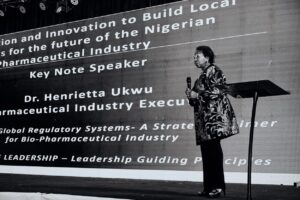
She advocated massive investment in sustainable manufacturing, stable electricity, water supply, industrial infrastructure, and advanced pharmaceutical technology to position Nigeria as a leading medicine production hub in Africa.
Industry leaders at the conference also warned that Nigeria cannot continue outsourcing its healthcare security, stressing that collaboration, innovation, and strategic partnerships are essential to building a resilient pharmaceutical ecosystem.
While commending President Bola Ahmed Tinubu’s Renewed Hope Agenda and the Presidential Initiative for Unlocking the Healthcare Value Chain, Ukwu said Nigeria must move beyond “fill-and-finish” operations to full-scale manufacturing of Active Pharmaceutical Ingredients and advanced medical products.

She highlighted major partnerships already driving local pharmaceutical expansion, including collaborations involving the International Finance Corporation, Fidson Healthcare Plc, and the near completion of Emzor Pharmaceutical Industries Limited’s API manufacturing plant in Ogun State.
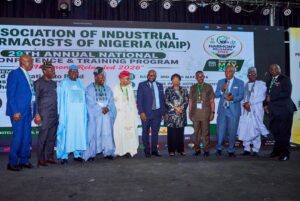
Ukwu identified high energy costs, poor infrastructure, unstable power supply, limited access to affordable financing, and inadequate pharmaceutical raw materials as major barriers preventing local manufacturers from competing effectively on a global scale.
Stakeholders at the conference agreed that Nigeria’s ambition to become Africa’s pharmaceutical manufacturing powerhouse will depend on consistent government policies, regulatory reforms, investor confidence, workforce development, and stronger collaboration between government, industry players, and international development partners.

