


In order to enhance the trust and credibility of the Nigerian arbitration system and make the country a safe arbitration seat,
The Director Legal and Company Secretary, Seplat Energy Plc,Edith Onwuchekwa says, there is need to drive efficiency, accountability, transparency, competency and ethics in the system.
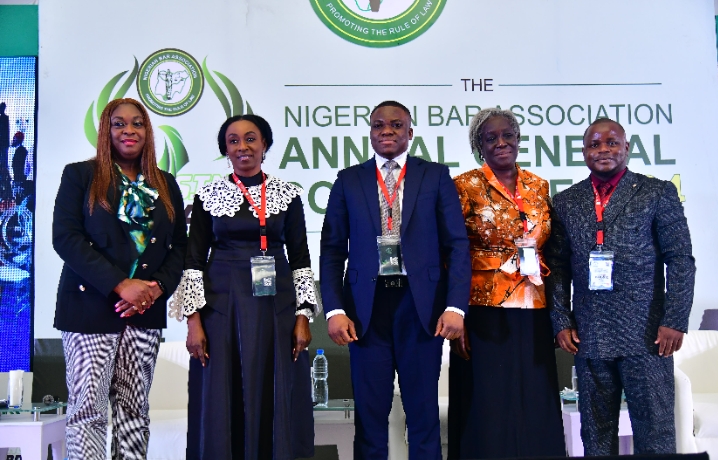
Edith Onwuchekwa, said this at the ongoing Nigerian Bar Association Annual General Conference 2024 in Lagos.
Onwuchekwa spoke during a panel session dubbed: ‘Making a Safe Arbitration Seat: Cultivating Trust, Efficiency, and Reliability in Dispute Resolution’, says, the arbitration system should implement clear and consistent procedural rules that parties can easily understand, follow and be held accountable to.
She also called for regular publication of data and reports on the outcome of arbitrations (with parties’ consent or on a no-names basis), adding that the public documents would give better visibility of the way arbitration proceedings are conducted and awards are delivered; thus, creating a system of precedence that gives greater assurance to practitioners and users of the system.
The Seplat Energy Legal Director advocated the establishment of a robust mechanism for providing, receiving and implementing feedback and complaints, to address parties’ concerns promptly and effectively. This, she noted, encourages engagement and builds trust in a system that is continuously improving, stressing that arbitration is very germane across sectors/facets of the country, including the energy space where Seplat Energy operates.
To strengthen competency and ethics, Onwuchekwa said: “There is a need for practitioners in the arbitration space to have the orientation (and where necessary re-education), as the primary goal of arbitration is for disputes to be resolved in a swift and efficient manner. It is key to enforce the continuous professional development for arbitrators and practitioners, to ensure that they maintain high standards of competency and ethics, particularly in alignment with global best practice.
“As part of professional development, it is important to encourage mentorship programmes, to ensure that less experienced practitioners are guided under the tutelage of seasoned arbitrators. Strict ethical guidelines and conflict of interest rules for arbitrators and practitioners should be enforced, and appropriate levels of consequence management should be applied to deter unethical practices.”
She also called for the use of modern technology to enhance the efficiency and reliability of the arbitration system; thus, promoting an efficient and accessible central database on the arbitration system.
“Nigeria is on the right path towards assuring domestic and international stakeholders. We have done this through the 2023 Arbitration and Mediation Act that adopts well-accepted international standards, such as the UNCITRAL Model Law and the New York Convention on the Recognition and Enforcement of Foreign Arbitral Awards. For example, mandatory compliance with arbitration agreements, interim measures, emergency arbitrator, virtual proceeding, etc,” Onwuchekwa added.
She explained: “The changes made by the new Arbitration Act demonstrates Nigeria’s commitment to establishing itself as an arbitration-friendly jurisdiction, while drawing inspiration from global best practices and the experience of leading arbitral institutions. However, we need to build on the initiatives introduced by the Arbitration Act, to secure the confidence of domestic and international stakeholders.
“The arbitral process must be seen to be efficient and trustworthy. A challenge with the present system is the multi-appellate stages for challenging arbitral award. The process needs to be curtailed; else it becomes another litigation process.
“We need to develop world-class arbitration facilities and digital infrastructure to provide efficient and accessible arbitration services; build capacity in Nigeria by promoting education and training programs for practitioners, businesses, and the public on the benefits and processes of arbitration; run public Awareness Campaigns on domestic and international platforms to highlight Nigeria’s capabilities and advancements in arbitration. Our arbitration institutions should foster strategic partnerships and collaborate with renowned international arbitration institutions to adopt best practices and provide cross-border knowledge sharing.”
The Seplat Energy Legal Director said the country is at a pivotal point where it needs to establish structure that attract more foreign direct investment and private participation across industries, adding that these potential investors will look to a credible, efficient and reliable arbitration system to resolve their commercial disputes whenever there is the need.

