


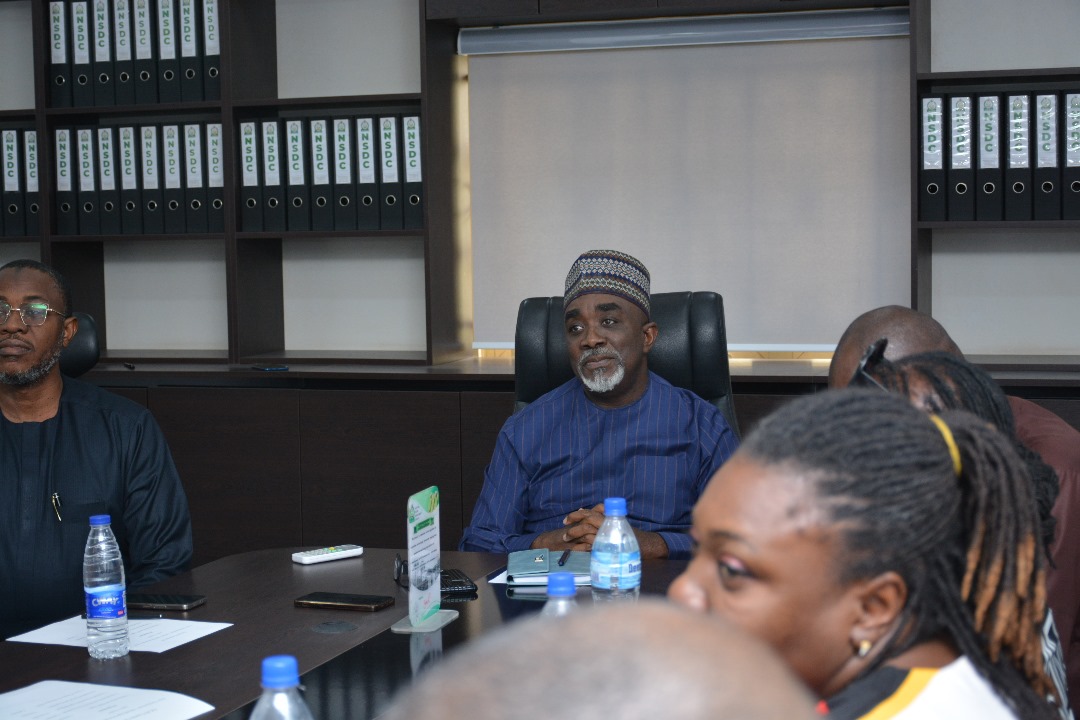
The Executive Secretary , National Sugar Development Council, Kamar Bakrin Has pledged his commitment to drive more investments into the sugar sector through the effective implementation of the sugar master plan.
He said the master plan which was launched in 2012 with a number of targets, aims to assist Nigeria attain self sufficiency in sugar production.
The Executive Secretary (ES) who noted this in Abuja at a presentation made during a courtesy visit by members of the Commerce and Industry Correspondents Association of Nigeria (CICAN).
further explained that NSMP is the strategic roadmap for the development of the sugar industry which is aimed primarily at attaining the self sufficiency in sugar production.
He therefore reeled out that, ” the council brought in two new sugar investors who control about 20,000 hectares of land under his leadership through the implementation of the Nigerian Sugar Masterplan (NSMP)”.
In his words, “You know that’s one of the major problems in Nigeria… if you don’t have proper incentive alignment, people will do whatever they want.”
He added that, the council had redesigned the Backward Integration Performance Incentive Framework to ensure proper alignment between the objectives of the NSMP and the activities of the operators.
On the revitalisation of the Nigerian Sugar Institute in Kwara state, the ES assured that the seedlings will be supplied to operators to help them fast track the development of sugar in their state so as to achieve production of two million seedlings.
Barkin disclosed that the council also identified three strategies that would help grow the sugar sector through its Nigerian Sugar Master Plan.
He said it sets clear performance target for the industry adding that the NSMP is built on key policy pillars.
According to him, the pillars are the backward integration, fiscal incentives , project intervention and performance management .
“The critical thing for us is to accelerate the attainment of the goals of the NSMP through strategic interventions. And we recognise three objectives: One is to increase the output of sugar locally to match domestic demand; to become a globally competitive player. We also want to become a globally competitive producer of sugar as a country and make imports a lot less attractive.
“And the third is to maximise the output of sugar because this sector also produces ethanol and power and animal feeds. We are seeking to maximise the industry’s output, and increase the amount of land available for the programme,” he said.

