


Anietie Patrick
Nigeria is moving to revive its struggling palm oil sector, with a bold target to save up to 500 million dollars annually from imports.
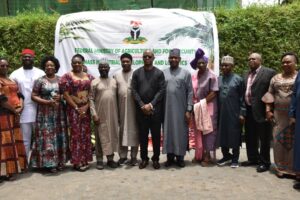
The Federal Ministry of Agriculture and Food Security, in collaboration with private sector partners, has convened key stakeholders in Abuja to drive a new investment-focused initiative aimed at boosting local production.
At the centre of the plan is a Public-Private Partnership model designed to attract investors, strengthen value chains, and reposition the country as a major player in the global palm oil market.
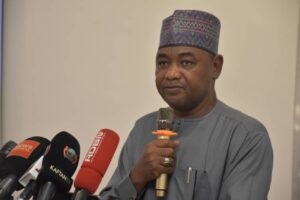
Speaking at the stakeholders’ meeting, the Minister of Agriculture and Food Security, Senator Abubakar Kyari, said Nigeria must shift from policy discussions to concrete action.
The Minister who was represented by his Senior Technical Assistant, Engr. Ibrahim Alkali, noted that although the country once dominated the global palm oil market in the 1960s, it now produces about 1.4 million metric tonnes annually far below domestic demand of over 2.5 million metric tonnes.
This shortfall, he says, has forced Nigeria to spend between 500 and 600 million dollars every year on imports.
The new initiative, aligned with the federal government’s Renewed Hope Agenda, will begin with the establishment of seven integrated oil palm estates across participating states.
Each estate is expected to cover 10,000 hectares, combining cultivation, processing, storage, and residential facilities for thousands of families.
Authorities say the programme will not rely on public borrowing but instead leverage private capital, with projected returns of up to 25 percent.
State governments are expected to play a critical role by providing land, infrastructure, and enabling policies to drive the project.
Stakeholders at the meeting say the initiative could significantly boost job creation, increase internally generated revenue, and improve livelihoods across the value chain.
With over three million hectares of suitable land still underutilized, the government believes the opportunity is clear.
The call now is for coordinated action and investment to unlock the sector’s full potential and restore Nigeria’s place in the global palm oil market.
